


Trunnion mounted ball valves are a critical component in modern fluid control systems, especially in high-pressure,
large-diameter, and severe-service applications. Because every pipeline, process plant, and industrial system has
its own operating conditions, these valves are frequently customized. Understanding the full range of trunnion mounted
ball valve customization options helps end users, engineers, distributors, and EPC contractors specify the right valve
for safety, reliability, and lifecycle cost.
This guide explains trunnion mounted ball valve customization options in detail, with a focus on industry‑standard
designs, materials, configurations, performance classes, and compliance requirements. The content is written in clear
technical English and structured for search engine optimization with headings, lists, and tables.
A trunnion mounted ball valve is a quarter‑turn valve in which the ball is mechanically supported at both the top and
bottom by trunnions (fixed shafts or bearings). Instead of floating freely, the ball is held in place, and line pressure
is absorbed by the trunnion supports rather than by the stem alone.
In many industrial sectors, standard catalog valves do not satisfy all process conditions. Trunnion mounted ball valve
customization enables a better match between valve capabilities and application requirements, reducing the total cost of
ownership and increasing safety margins.
Trunnion mounted ball valve customization can be grouped into several broad categories. Each category contains multiple
options that can be combined to create a valve specification tailored to a specific project or plant.
The body style of a trunnion mounted ball valve has a direct impact on maintenance, weight, leakage paths, and cost.
Customization often begins with selecting the appropriate construction type.
| Body Type | Description | Key Advantages | Typical Applications |
|---|---|---|---|
| One‑Piece Body | Body is cast or forged as a single piece; ball and seats inserted through end connections. | Fewest potential leak paths; compact; often cost‑effective in large production runs. | Standard pipeline service where in‑line maintenance is not critical. |
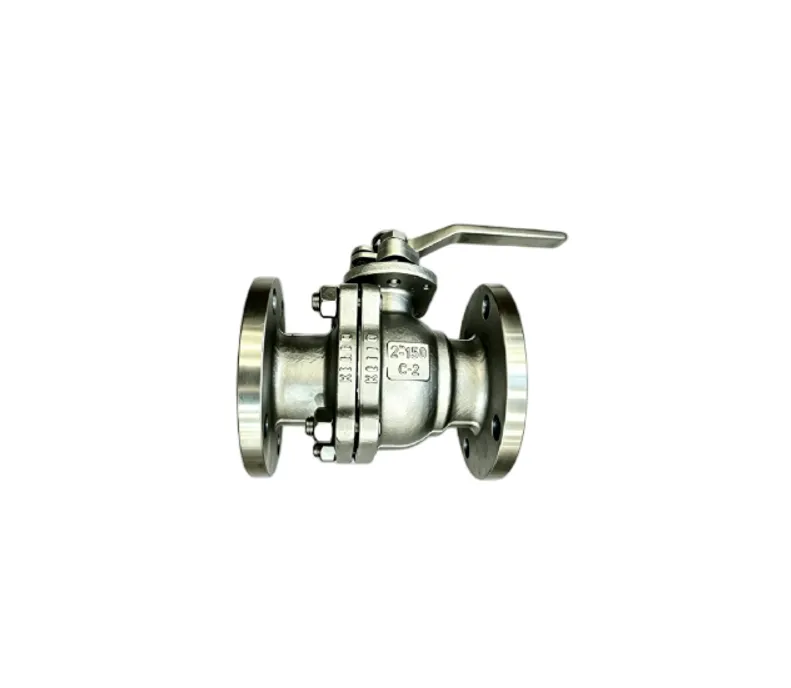
| Two‑Piece Body | Body split into two major pieces, usually with a bolted joint. | Balance between maintainability and leak‑tight design; easier assembly and inspection. | General process and pipeline service; widely used in oil, gas, and petrochemical sectors. |
| Three‑Piece Body | Central body section containing the ball and seats, with two separate end pieces. | Excellent maintainability; center section can be removed without disturbing pipe alignment (depending on design). | Applications where frequent maintenance or internal inspection is expected. |
| Design Type | Features | Customization Considerations |
|---|---|---|
| Side‑Entry | Ball and internal components inserted through the side opening; body typically split horizontally or vertically. |
|
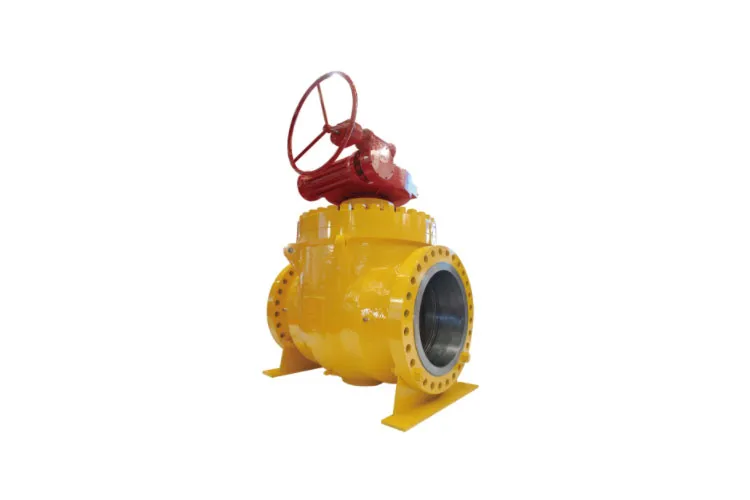
| Top‑Entry | Ball and internals inserted or removed from the top, through the bonnet opening. |
|
Trunnion mounted ball valves are produced in a wide range of nominal sizes and pressure classes. Customization involves
matching mechanical design, wall thickness, and sealing arrangements to the required pressure and diameter.
| Nominal Size | Metric Size (Approx.) | Typical Use |
|---|---|---|
| 1/2″ – 4″ | DN15 – DN100 | Process units, skids, and branch lines where compact design is important. |
| 4″ – 24″ | DN100 – DN600 | Transmission pipelines, main process lines, header isolation. |
| 24″ – 60″+ | DN600 – DN1500+ | Large‑diameter trunk lines and terminals; requires sophisticated trunnion support and low‑torque design. |
Trunnion mounted ball valves are offered in pressure classes that often align with ASME/ANSI B16.34 and API 6D/API 608
requirements. Common pressure designations include:
Customized designs may accommodate:
Material selection is one of the most important aspects of trunnion mounted ball valve customization. The body, ball,
stem, trunnions, seats, and seals must be compatible with the process fluid, operating temperature, and external
environment.
| Material | Typical Standard | Characteristics | Recommended Uses |
|---|---|---|---|
| Carbon Steel | ASTM A216 WCB, ASTM A105, ASTM A350 LF2 | Good strength, cost‑effective; low alloy content; limited corrosion resistance in aggressive fluids. | General oil, gas, water, and non‑corrosive process services; low to medium temperature. |
| Low‑Temperature Carbon Steel | ASTM A350 LF2, ASTM A352 LCB | Enhanced toughness at low temperatures. | Cryogenic or sub‑zero service; LNG processing; cold climate pipelines. |
| Stainless Steel | ASTM A351 CF8M, CF3M; ASTM A182 F304, F316 | Good general corrosion resistance; suitable for many chemicals. | Chemical plants, refinery units, and food‑grade or clean service where corrosion is a concern. |
| Duplex / Super Duplex Stainless Steel | ASTM A995 Grade 4A, 5A; ASTM A182 F51, F53 | High strength and resistance to stress corrosion cracking and pitting. | Offshore, seawater, sour service, and chloride‑rich environments. |
| Nickel Alloys | Alloy 625, Alloy 825, Monel, Hastelloy | Excellent resistance to highly corrosive and high‑temperature media. | Acid service, high‑temperature oxidizing or reducing environments, critical chemical processes. |
The ball and stem are usually made from:
Customization options include:
In hydrogen sulfide (H2S) environments, materials must meet NACE MR0175/ISO 15156 or similar
standards. Customization may involve:
End connections determine how the trunnion mounted ball valve is joined to the piping system. The connection choice affects
leak‑tightness, ease of installation, and suitability for repeated maintenance.
| End Type | Description | Advantages | Considerations |
|---|---|---|---|
| Flanged Ends | Valve connected to pipe flanges according to ASME, EN, or other standards. | Easy installation and replacement; standardized; suitable for most pipeline and process services. | More external leak paths at gaskets; heavier and bulkier than welded designs. |
| Butt‑Weld Ends | Valve end bevels welded directly to pipeline. | Minimized external leakage risk; preferred for buried or high‑integrity pipelines. | Requires proper welding procedures; valve removal for maintenance is more complex. |
| Socket Weld Ends | Pipe inserted into socket and welded around the circumference. | Common for smaller sizes where butt‑weld is less practical. | Not typically used for large‑diameter trunnion mounted ball valves. |
| Threaded Ends | Female or male threads (e.g., NPT, BSP). | Quick assembly for small‑diameter valves and low‑pressure systems. | Less common for trunnion designs; used mainly for smaller floating ball valves. |
Seats and seals are central to the performance of a trunnion mounted ball valve. They determine leakage rates, torque,
temperature limits, and suitability for abrasive or corrosive media.
| Seat Type | Materials | Benefits | Limitations |
|---|---|---|---|
| Soft‑Seated | PTFE, reinforced PTFE (RPTFE), PEEK, Nylon, Devlon etc. | Excellent bubble‑tight shut‑off; low operating torque. | Limited high‑temperature capability; may be damaged by solids or abrasive media. |
| Metal‑Seated | Metallic seat rings with hard‑faced sealing surfaces (Stellite, tungsten carbide, chromium carbide). | High‑temperature resistance; suitable for abrasive and erosive conditions. | Typically requires higher torque; may have slightly higher allowable leakage. |
and vacuum conditions.
increases.
Many trunnion mounted ball valves use a combination of mechanical spring loading and pressure energization to achieve
tight shut‑off across the full pressure range.
| Material | Approximate Temp. Range | Characteristics | Typical Applications |
|---|---|---|---|
| PTFE | -29°C to +180°C (approx.) | Low friction, good chemical resistance; widely used, cost‑effective. | General chemical and process service with moderate temperature. |
| Reinforced PTFE (RPTFE) | -29°C to +200°C (approx.) | Improved wear and pressure resistance vs. pure PTFE. | Higher pressure or moderate solids content in media. |
| PEEK | -40°C to +260°C (approx.) | High mechanical strength, good high‑temperature and chemical resistance. | Severe service where both temperature and pressure are relatively high. |
| Nylon / Polyamide | -40°C to +120°C (approx.) | Good toughness, lower temperature capability than PTFE in many cases. | Water, non‑aggressive fluids, moderate pressure service. |
| Metal with Hard‑Facing | Up to 500°C+ (depending on alloy) | Extreme abrasion and temperature resistance. | Steam, catalyst, slurry, and other severe services. |
Surface treatments extend the service life of trunnion mounted ball valves by resisting corrosion, wear, and galling.
Coatings are applied to internal and external surfaces according to specific service needs.
resistance and reduce friction.
Customization involves selecting coating systems suitable for the environment (onshore, offshore, marine, arctic,
tropical) and complying with project coating specifications.
Trunnion mounted ball valves are often automated for remote control, safety shutdown, and process optimization.
Customization includes selecting actuation technology and integrating instrumentation.
| Actuator Type | Description | Advantages | Typical Use Cases |
|---|---|---|---|
| Manual (Lever or Gear) | Hand lever or gear operator driven by human force. | Simple, low cost, suitable for small sizes or infrequent operation. | Block valves, emergency backups, and non‑critical applications. |
| Pneumatic Actuator | Uses compressed air to operate quarter‑turn motion. | Fast response, high reliability, commonly used in automated systems. | ESD (emergency shut‑down) valves, remote on/off control, onshore and offshore installations. |
| Hydraulic Actuator | Operated by hydraulic fluid pressure. | High torque in compact size; suitable for subsea or high‑torque applications. | Subsea valves, large‑diameter valves in remote or offshore applications. |
| Electric Actuator | Electric motor drives the valve via gears. | Precise control, suitable where air or hydraulic power is not available. | Plant utilities, building services, and some process control duties. |
Although trunnion mounted ball valves are primarily on/off devices, customization sometimes addresses specific flow
characteristics or severe process conditions.
| Bore Type | Description | Advantages | Applications |
|---|---|---|---|
| Full Bore (Full Port) | Bore diameter approximately equal to the nominal pipeline diameter. | Minimal pressure drop; easy pigging; reduced turbulence. | Transmission pipelines, piggable lines, critical isolation where minimal restriction is required. |
| Reduced Bore (Reduced Port) | Bore diameter smaller than pipeline; one or more step reductions. | Lower valve weight and cost; potentially smaller actuators required. | Process lines where moderate pressure drop is acceptable. |
Trunnion mounted ball valves can be customized for both high‑temperature and cryogenic service.
Safety features and design details are often customized to match project risk assessments and regulatory expectations.
Fire‑safe trunnion mounted ball valves are designed so that, if soft seals are destroyed by fire, metal‑to‑metal seating
still maintains a degree of sealing. Fire‑safe certification often follows standards such as:
Ease of maintenance and user‑friendliness can be significantly improved through customization, especially in complex
industrial facilities.
Trunnion mounted ball valve customization is often driven by the need to comply with international or project‑specific
standards for design, manufacturing, and testing.
Standard tests may include:
The following table summarizes common parameters used when specifying and customizing trunnion mounted ball valves.
| Parameter | Typical Options | Customization Notes |
|---|---|---|
| Valve Type | Trunnion mounted ball valve, side‑entry or top‑entry, split‑body or fully‑welded. | Selection depends on maintenance strategy and project requirements. |
| Size Range | DN15 – DN1500 (1/2″ – 60″+) | Larger sizes may require advanced trunnion support and special actuation. |
| Pressure Class | ASME Class 150 – 2500, API 3000 – 10000 | Match to pipeline design pressure and safety margins. |
| Body Material | Carbon steel, LTCS, stainless steel, duplex, super duplex, nickel alloys. | Chosen according to corrosion, temperature, and sour service requirements. |
| Trim Material | Stainless steels, duplex steels, hard‑faced alloys. | Ball and seats may be coated or overlaid for wear and corrosion resistance. |
| Seat Type | Soft‑seated (PTFE, RPTFE, PEEK) or metal‑seated. | Soft seats for bubble‑tight sealing; metal seats for high temp or abrasive service. |
| Bore Type | Full bore or reduced bore. | Full bore used in piggable pipelines; reduced bore reduces cost and weight. |
| End Connections | Flanged, butt‑weld, socket weld, threaded (limited). | Flanged for maintainability; welded for high‑integrity or buried lines. |
| Operation | Manual, pneumatic, hydraulic, or electric actuation. | One‑off or fail‑safe operation, speed of closure, and torque requirements are considered. |
| Design Standards | API 6D, API 608, ASME B16.34, ISO standards. | Project specification may dictate exact standard and edition. |
| Testing | Hydrostatic, air, fire‑safe, emission, cryogenic tests as required. | Test scope defined by client, industry regulations, and standards. |
| Special Features | DBB capability, anti‑static, blowout‑proof stem, emergency sealant injection, locking device. | Customized to improve safety, reliability, and regulatory compliance. |
To obtain the right trunnion mounted ball valve configuration for a project, a comprehensive specification should be
prepared. Common information includes:
When trunnion mounted ball valves are correctly customized, operators and plant owners benefit from:
Trunnion mounted ball valves are among the most versatile and customizable valve types available for modern piping and
pipeline systems. By understanding the array of customization options—body design, materials, pressure class, end
connections, seats and seals, coatings, actuation, safety features, and testing—engineers can specify valves that align
precisely with process requirements, regulatory frameworks, and lifecycle cost objectives.
A structured approach to trunnion mounted ball valve customization ensures that each element of the valve—mechanical
design, sealing system, material selection, and automation package—contributes to long‑term reliability and safe
operation in even the most demanding industrial environments.
“`
Persona di contatto:Max.Song (SongShanshan)
Titolo:Direttore Generale
Cellulare:+86 15611322632
Dillo:+86 10 89282693
E-mail:international@bvmc.com
Indirizzo:n. 3, Lvhai Road, città di Pangezhuang, distretto di Daxing, Pechino


Copyright © Pechino Valve Factory Co., Ltd
Mappa del sitoQuesto sito utilizza i cookie per assicurarti la migliore esperienza sul nostro sito.




 Phone